Red River Army Depot’s Next Mission
In 1939, Texarkana was still fighting to recover from the Great Depression. While projects funded through the Works Progress Administration helped provide jobs and infrastructure, local leaders knew the region needed something far greater to secure long-term economic stability. In response, the Texarkana Chamber of Commerce assembled a group led by Robert Maxwell to pursue federal defense-related opportunities tied to America’s growing military preparations ahead of World War II. Their initial goal was modest: to attract a project that could create at least 100 jobs.
What followed would far exceed anyone’s expectations, permanently reshape Texarkana, and establish one of the nation’s most important military industrial complexes.
Texarkana’s effort gained momentum through the influence of Senator Morris Sheppard and Congressman Wright Patman, both powerful advocates for the region in Washington, DC. Chamber representatives traveled to the nation’s capital and met with military leaders, including Secretary of War Henry Stimson. For nearly two years, Texarkana leaders provided detailed studies regarding transportation, labor, utilities, geography, and natural resources while Army officials quietly evaluated potential sites across the region.
Then came the breakthrough. The federal government announced plans for a $45.5 million facility capable of producing 100,000 artillery shells per day in Bowie County, followed shortly thereafter by a neighboring munitions supply depot. Construction began at extraordinary speed. Originally called the Texarkana Ordnance Depot, the installation later became Red River Army Depot (RRAD). Over 22,000 construction workers flooded the area to build the depot and its supporting infrastructure.
During World War II, the Depot became a critical logistics and maintenance hub supporting Allied operations around the globe, including the Normandy invasion. The installation expanded rapidly into tank repair, vehicle maintenance, storage, and troop training operations.
Adjacent to the Depot, the Lone Star Army Ammunition Plant emerged as another major wartime operation, producing artillery shells, bombs, fuses, and other munitions that supported American military efforts throughout World War II, the Korean War, and the Vietnam War. The military complex transformed Texarkana’s economy, population, infrastructure, and identity. Entire neighborhoods, businesses, and transportation systems grew around the installation.
Unlike many wartime facilities, Red River Army Depot did not disappear after World War II. Instead, it adapted to become a vital part of the Army’s sustainment portfolio. Tens of thousands of combat vehicles returning from overseas were repaired and restored at the Depot, many of which were later redeployed during the Korean War. Over time, Red River developed one of its most important specialties: manufacturing rubber products and track systems for armored vehicles. Through decades of modernization, the Depot became the Department of War’s only facility dedicated to rebuilding and manufacturing tank track shoes and road wheels, eventually becoming one of the Army’s primary providers for M1 Abrams tank road wheels.
The Depot continued serving the nation through Korea, Vietnam, Desert Storm, Iraqi Freedom, and modern military operations while surviving multiple rounds of base realignment and closure reviews due largely to overwhelming community support and its strategic importance.
Yet today, Red River Army Depot finds itself at another transformational moment. In the spring of 2025, the Army’s Transformation Initiative subjected the Depot to another potential realignment threat. Local, state, and national leaders immediately mobilized around a strategy focused not only on preservation but also on leveraging existing and emerging Army organic industrial base modernization, which is part of the overall defense industrial base, along with advanced manufacturing efforts. Two major themes quickly emerged from those conversations: drone technology and lithium. Under the leadership of Commander Colonel Denis Fajardo and Deputy Commander Jamie Bass, those ideas are rapidly transitioning from discussion to implementation.
Fajardo takes great pride in his legacy being one of transformative thinking among depot employees who have shifted their mindsets from “Is this the day we are going to shut down and lose our jobs?” to one of “I can go home without worry. We will be back tomorrow.” Deputy Commander Jamie Bass elaborates by saying, “I am most proud of our improvements in efficiency and processes. We are among the best of all the industrial bases in the country.” Fajardo supports Bass’ mindset by stating, “RRAD can shape and grow with the times. We are modernizing and changing our processes to reflect what our nation needs.”
The modern vision for Red River Army Depot extends far beyond traditional maintenance operations. The Depot leaders repeatedly emphasized that the Depot functions “more like a business than an Army organization,” operating with a self-sustaining mindset while supporting critical national defense missions.
With an operational footprint approaching $600 million, the installation exists to ensure readiness, surge capability, and logistical support for the United States military.
That readiness mission has become increasingly urgent in an era of global instability and growing concern regarding America’s industrial capacity. Fajardo and Bass referenced the World War II concept of the book Freedom’s Forge, when American industry rapidly transformed into the backbone of wartime production. Today, many defense officials worry that the nation no longer possesses the same ability to scale manufacturing quickly during a major crisis.
As a result, Red River Army Depot is aggressively repositioning its focus around advanced manufacturing, robotics, drone technology, and modernization initiatives. Texarkana, Texas City Manager, David Orr described the recent evolution of the Depot as, “Working alongside Red River Army Depot leadership, the Chamber’s Military Affairs Committee, and our congressional delegation has truly been the opportunity of a lifetime. What began as a potential closure crisis has become a turning point, creating real momentum for growth and transformation at the Depot. Seeing our community rally behind the installation and especially the team members at Red River Army Depot, as they position it for the future to make our nation’s defense stronger, has been nothing short of remarkable.”
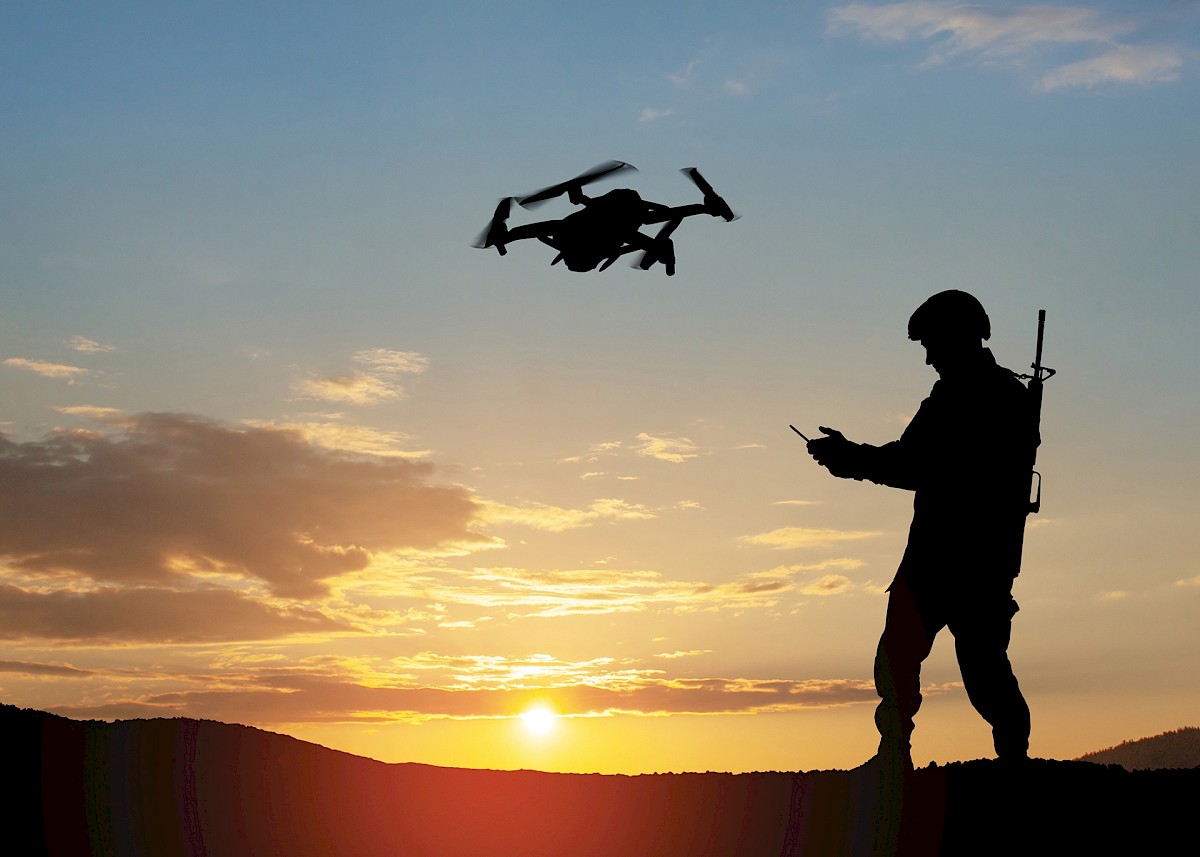
The Depot is already expanding its role in drone-related manufacturing through contracts reportedly valued at around $80 million. While Red River may not assemble complete drone systems, it is increasingly becoming a vital part of the national supply chain supporting unmanned aerial vehicles and future military readiness initiatives.
Congressman Pat Fallon highlighted that growing vision during a 2025 visit to the Depot, where he toured potential drone production capabilities with Army officials while also exploring lithium extraction partnerships tied to the region. The conversations pointed toward a larger strategy of transforming Red River Army Depot into a hub for defense innovation, advanced manufacturing, and critical mineral development.
Lithium has become an equally important piece of the conversation. Regional leaders repeatedly emphasized that lithium is no longer simply an economic development opportunity. It is a matter of national security. America’s growing demand for battery technology, electric vehicles, energy storage, and defense systems has intensified concerns regarding reliance on foreign sources for critical minerals.
The Smackover Formation beneath portions of Arkansas and East Texas is now viewed as one of the nation’s most promising domestic lithium opportunities. Companies like EnergyX are pursuing direct lithium extraction projects in partnership with industrial and regional stakeholders, including activity tied to TexAmericas Center.
Direct Lithium Extraction (DLE) has been promoted as a more environmentally responsible alternative to traditional mining. Leaders explained that the process minimizes surface disruption and returns brine underground after extraction, reducing many of the environmental concerns historically associated with large-scale mining operations.
Congressman Nathaniel Moran summarized the strategic significance clearly, stating, “East Texas and the ArkTex region are ground zero for America’s lithium future and a critical piece of rebuilding our nation’s industrial and national security independence.”
Education and workforce development have become critical pieces of the broader strategy as well. Regional institutions, including Texarkana College and Texas A&M University–Texarkana, are partnering with industry leaders to create workforce pipelines focused on advanced manufacturing, drone technology, robotics, and industrial maintenance.
Dr. Jason Smith, president of Texarkana College, emphasized the importance of those partnerships. “Texarkana College is proud to be part of a partnership that is creating direct pathways for students into high-skill, high-demand careers while helping meet critical workforce needs in our region. The Defense Economic Adjustment Assistance Grant through the State of Texas, with the support of the governor and the Texas Military Preparedness Commission has made a grant possible that helps connect students to hands-on training in advanced manufacturing and drone technology while building a workforce pipeline that supports Red River Army Depot and the broader Texarkana community.”
Support for Red River Army Depot has also intensified at the state and local levels. Fred Milton, retired Deputy Commander/CEA Defense Distribution and current member of Governor Abbott’s Committee to Support the Military, praised the renewed momentum surrounding the installation and warned that threats to military workload remain very real. “Our vigilance must be keen, our resolve endless, and our generation of unique ideas and attainable solutions forthcoming if we are to win,” Milton said while emphasizing the importance of sustaining the military complex that pumps billions of dollars annually into the regional economy.
That momentum reached another milestone on May 7, 2026, when Senator Ted Cruz visited Red River Army Depot and EnergyX to highlight the growing national significance of defense modernization and domestic lithium production in the Texarkana region. Discussions focused on the Depot’s evolving role in advanced manufacturing and drone technology, the strategic importance of the Smackover Formation, and opportunities to strengthen America’s domestic battery and critical mineral supply chain.
Today, Red River Army Depot stands at the intersection of several major national priorities: defense industrial base modernization, advanced manufacturing, drone technology, robotics, workforce development, lithium extraction, and industrial resilience. These are no longer separate conversations. They are deeply interconnected.
What began in 1939 as a modest effort by local leaders hoping to create 100 jobs has evolved into one of America’s most strategically important military industrial base assets, employing more than 3,200 people. More importantly, the story is still being written.
Red River Army Depot is no longer simply an Army organic industrial base sustainer. It is actively positioning the region for the future of defense manufacturing and industrial readiness, while ensuring our nation is postured to meet the challenges of the future.